
BLOG
Complete Guide to Termite Risks, Inspections and Prevention for Brisbane Bayside Homes
Brisbane bayside homes sit in a warm, humid environment where gardens, summer rainfall and year-round outdoor living can create favourable conditions for subterranean termites. Properties around Wynnum, Manly, Lota, Birkdale and Cleveland range from raised timber houses to low-set brick homes, townhouses and renovated coastal properties. Each building type presents different inspection points.
Termites usually travel from an underground colony through soil or concealed mud galleries. They can enter around slab penetrations, behind garden beds, through cracks, beneath raised floors or beside structures added after the original termite management system was installed. A house does not need to be old or poorly maintained to face termite activity.
How Termites Reach Bayside Homes
Subterranean termites depend on concealed travel routes that protect them from light and drying conditions. Around a low-set house, common areas requiring attention include slab edges, service penetrations, weep holes, attached garages and places where paving or soil sits too high against an external wall.
Raised timber homes require clear access beneath the floor. Stored boxes, scrap timber, enclosed lower levels and leaking plumbing can obstruct inspection or create sheltered contact points. Deck posts, stairs, fences, pergolas and garden structures also deserve attention because termite activity may start outside the main building.
Moisture does not cause termites, but it can support conditions that make a property more attractive. Leaking taps, blocked drainage, poorly ventilated subfloors and irrigation directed towards walls can keep soil and timber damp. Coastal humidity can slow drying in shaded areas, particularly after prolonged rain.
Warning Signs That Require Closer Investigation
Mud leads are one of the clearest signs of subterranean termite movement. They may appear as narrow soil-coloured lines across masonry, foundations, piers or timber. Other signs include timber that sounds hollow, blistered paint, rippled wall linings, damaged skirting boards and doors or windows that begin sticking without an obvious moisture or movement issue.
Winged termites may appear during warm, humid conditions, often after rain. Discarded wings near windows, lights or doors show that a flight has occurred, but they do not identify the colony location by themselves. Similar-looking flying ants can also swarm, so correct identification matters.
Do not break open mud leads, spray suspected activity or remove damaged timber before an inspection. Disturbance can cause termites to retreat into concealed areas and make active workings harder to trace.
What a Termite Inspection Examines
A termite inspection is broader than checking one damaged board. The inspector examines accessible internal and external areas for active termites, evidence of earlier activity, damage, moisture concerns and conditions that may obstruct detection. Relevant areas can include roof spaces, subfloors, wall edges, fences, trees, stumps, decks, sheds and other structures within the inspected area.
Access affects the quality of the inspection. Heavy storage against walls, locked rooms, fixed floor coverings and enclosed subfloors can prevent close examination. Clearing accessible edges beforehand gives the inspector a better view of likely entry points.
Queensland guidance recommends engaging a licensed pest controller to inspect and report on a property every year, or more often in higher-hazard conditions. The appropriate interval may also appear on the building's termite management notice.
Understanding Termite Barriers and Management Notices
A termite barrier does not necessarily stop termites from entering land or approaching a building. Physical and chemical systems are designed to manage concealed access, protect selected building areas or make termite movement easier to detect. The system must remain visible, intact and maintained according to its requirements.
The termite management notice is commonly located inside the electrical meter box. It records the protection method, installation date, expected life of any chemical component and recommended inspection or maintenance schedule. Homeowners should keep this information with inspection reports and building records.
Renovations can compromise an existing system. New patios, paths, garden beds, turf, decks, pergolas and extensions may cover inspection zones, bridge barriers or disturb treated soil. Plans should account for termite management before construction or landscaping begins.
Practical Prevention Around the Property
Keep weep holes, slab edges and subfloor entry points visible. Do not stack timber, cardboard or unused materials against the house. Raise firewood from the ground and position it away from external walls. Remove dead stumps where practical, fix leaking taps and redirect irrigation that wets the building perimeter.
Avoid building soil, mulch or garden beds over exposed inspection edges. Check beneath decks, around posts and beside retaining structures for mud leads or concealed timber contact. These measures do not replace a termite management system or inspection, but they reduce obstructions and make unusual changes easier to see.
The strongest approach combines regular professional inspections, correct system maintenance and simple property checks between visits. Brisbane bayside conditions vary from one block to another, so drainage, construction and landscaping should guide how closely each area is monitored.


DISCOVER WHAT OUR CUSTOMERS HAVE TO SAY ABOUT US
REVIEWS
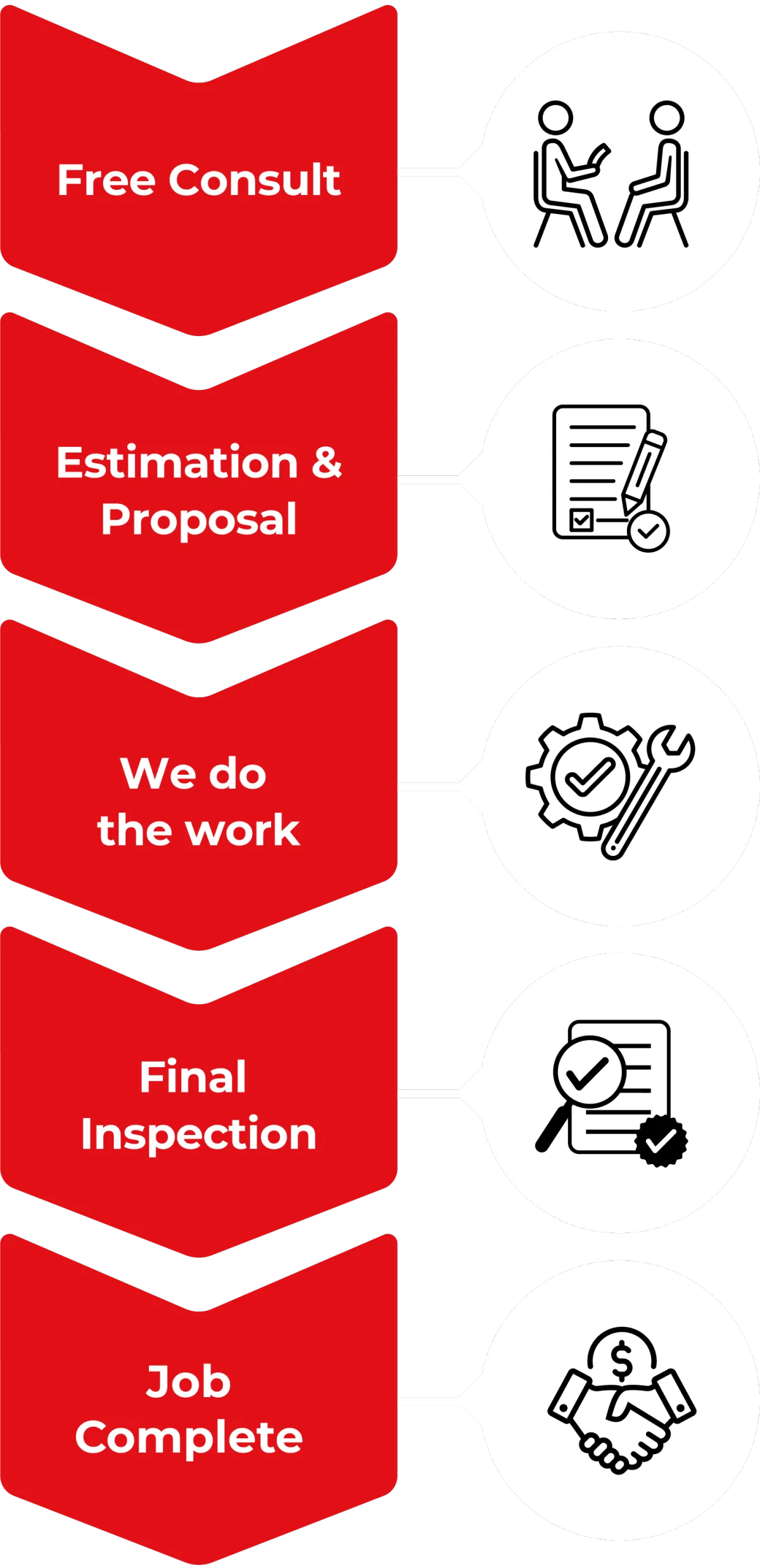
our process
Our process is simple and only contains a few simple steps

SERVICE AREAS
proudly serving Wakerley
Wakerley
Gumdale
Capalaba
Manly
Manly West
Wynnum
Wynnum West
Lota
Hemmant
Thorneside
Birkdale
Wellington Point
Cleveland

frequently asked questions
Find clear answers to the questions we’re asked most often.
How does the repair process work?
Once you contact Appliance Repair Solutions, a technician will discuss the issue with you and arrange a suitable inspection time. The problem is diagnosed on site, and clear advice is provided before any repair work begins. The goal is to complete repairs efficiently while keeping communication straightforward throughout the process.
How quickly can I book a technician?
Service availability depends on your location and the type of appliance issue. In many cases, same day or next day bookings may be available across Sydney. The team aims to respond promptly and provide flexible scheduling where possible.
Do you provide quotes before starting repairs?
Yes. After assessing the appliance and identifying the fault, you will receive clear information about the recommended repair and expected costs. This helps customers make informed decisions before approving any work.
What should I do before the technician arrives?
It helps to clear access around the appliance and make note of any error codes or unusual behaviour. If possible, have the appliance model number available as this can assist with diagnosing the issue faster. The technician will guide you through anything else needed when confirming the booking.
What should I do before the technician arrives?
It helps to clear access around the appliance and make note of any error codes or unusual behaviour. If possible, have the appliance model number available as this can assist with diagnosing the issue faster. The technician will guide you through anything else needed when confirming the booking.
proudly serving Baulkham Hills
Homebush
Gladesville
Leichhardt
North Sydney
Mosman
Box Hill
Marsden park

Trusted & Accredited Plumbers


READY TO take the next step?
get a free quote TODAY!
Bug Busters Brisbane
Fennessy Cl Wakerley
